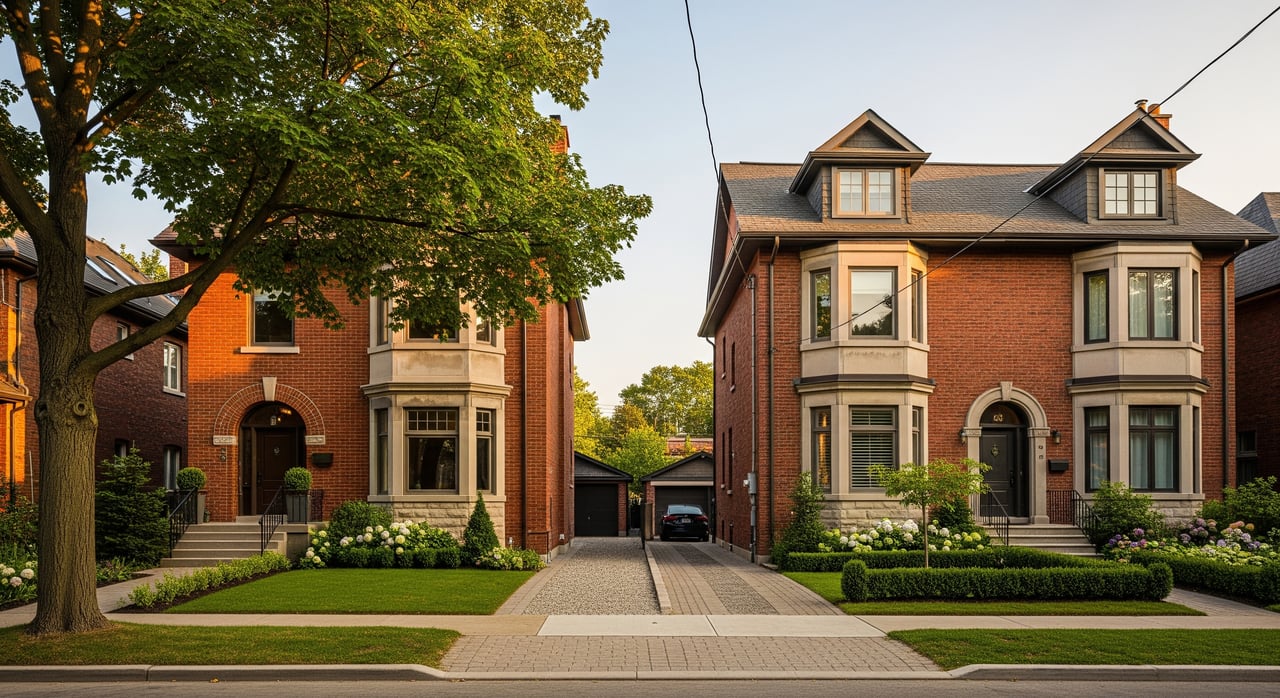
Trying to choose between a detached and a semi-detached home in Bedford Park? It is a big call that touches your space, privacy, renovation plans, and long-term value. You want a home that fits your daily life now and supports your goals later. In this guide, you will learn how each home type works, what is common in Bedford Park, the trade-offs that matter, and a clear checklist to compare real listings with confidence. Let’s dive in.
Detached vs semi at a glance
| Feature | Detached | Semi-detached |
|---|---|---|
| Basic definition | Freestanding home that does not share walls | One of two homes attached along a shared party wall |
| Lot and frontage | Typically wider lots with more side yard | Typically narrower lots with one shared side |
| Privacy and light | Windows on all sides, more separation | One shared wall, less side exposure |
| Maintenance | Full responsibility for all exterior sides | Responsibility for your unit; party wall considerations |
| Renovation flexibility | Easier access for additions and rebuilds | Additions possible, but party wall and access need planning |
| Parking potential | More space for wider or double garages | Often single garage or driveway, street rules vary |
What you will see in Bedford Park
Bedford Park is an established North Toronto neighbourhood with a mix of early 20th-century homes, mid-century houses, and many properties rebuilt or extensively renovated in recent decades. This mix creates real variety, from original semis on narrower frontages to large, modern detached homes on deeper or wider lots. Local zoning and planning rules shape what you can build, how big you can add, and where you can place secondary suites.
The City of Toronto’s Official Plan and Zoning By-law 569-2013 guide height, setbacks, and lot coverage. Some properties may have heritage considerations. Always confirm the rules that apply to a specific address before you plan upgrades or a rebuild.
Lot sizes and frontage
- Semi-detached lots in older Toronto neighbourhoods often range from about 15 to 30 feet in width, with many between roughly 16 and 25 feet.
- Detached lots commonly range from about 30 to 60 feet or more in width in established areas.
- Bedford Park includes streets with larger lots than the citywide average, but lot size varies block by block. Verify exact dimensions using City of Toronto property maps or the land registry for any home you are considering.
House eras and styles
- Pre-war homes often feature brick exteriors, pitched roofs, and character details. Many have been updated inside.
- Post-war infill and modern rebuilds are common. You will find larger two-storey homes, contemporary layouts, and higher ceilings, especially on wider detached lots.
Renovation and add-ons
- Basement suites: Many detached and semi-detached homes can support a legal secondary suite if they meet zoning and building code requirements. Confirm permits and parking rules before you buy.
- Rear or second-storey additions: Both types can support additions. Detached homes usually offer easier access and fewer shared-wall concerns. Semis require attention to side-yard setbacks and neighbour impact.
- Laneway suites: Eligibility depends on lane access, servicing, lot depth, and setbacks. Not every Bedford Park lot qualifies.
- Demolition and rebuild: More straightforward on detached properties. Semis may need neighbour coordination or a partial rebuild approach because of the party wall.
- Costs and timelines: Major renovations and rebuilds in Toronto are significant investments. Consult local contractors and check City permit processing times early in your plan.
Price factors and resale in Bedford Park
In Toronto, detached homes usually sell at a premium compared to semis, especially on wider or deeper lots. That said, lot size and location often drive price more than the detached label alone. A well-renovated semi with smart floor area on a desirable street can trade close to a smaller or dated detached nearby.
Key price drivers to weigh:
- Lot size and shape. Wider frontages and deeper yards typically command higher prices and better long-term value.
- Streetscape continuity. A detached home among similarly scaled detached houses usually holds value well, and the same is true for semis on streets of comparable semis.
- Renovation level. Updated kitchens, baths, and efficient layouts lift both types. Legal secondary suites can improve value and flexibility.
- Micro-location. Proximity to parks, transit, and shopping, plus the immediate block’s look and feel, influences demand.
For current numbers, review recent Bedford Park sales by home type from TRREB market reports and MLS sold searches, or request a Comparative Market Analysis tailored to your shortlist. Prices shift by season and street, so use the most recent 6 to 12 months of solds for a fair read.
Lifestyle trade-offs to consider
Privacy and natural light
- Detached: Windows on all sides mean better cross-breezes and light. Side yards help with privacy and access.
- Semi-detached: One shared wall reduces side windows, but many semis still have bright front and back rooms, especially on deeper lots.
Noise and neighbours
- Detached: Lower chance of hearing neighbours through walls.
- Semi-detached: Party wall construction quality matters. During inspections, assess soundproofing and any signs of movement or moisture at the shared wall.
Maintenance and operating costs
- Detached: More exterior to maintain, which can mean higher upkeep and potentially higher property taxes due to larger land area.
- Semi-detached: Smaller exterior envelope can reduce some costs, but shared-wall issues may add complexity if foundation or roof work affects both sides.
Parking and storage
- Detached: Wider lots often allow for a larger garage or more driveway space.
- Semi-detached: Often single-car garages or driveway parking. Confirm street parking rules and permit eligibility.
Who tends to prefer what
- Families: Many families prioritize detached homes for privacy, yard space, and parking, especially if they need multiple bedrooms.
- Investors: Semis can be a more affordable entry point, with potential to add a legal suite if zoning and space allow.
- Downsizers: A renovated semi or a smaller detached can both work. Focus on stairs, maintenance level, parking, and proximity to daily needs.
How to compare two listings side by side
Use this quick process when you are torn between a Bedford Park detached and a semi:
- Map and dimensions
- Pull the legal lot width and depth from the City parcel map or land registry. Note lot shape, right-of-way, and easements.
- Building envelope and floor area
- Compare actual usable square footage, ceiling heights, and layout efficiency. A smarter layout can beat raw size.
- Renovation history and permits
- Ask for building permits for major work, including finished basements and additions. Confirm final inspections were passed.
- Party wall and shared elements (semis)
- Check for any recorded party wall agreements. Ask about past shared repairs to foundations, roofing, or shared services.
- Sound and structure
- During showings, listen near the shared wall in semis. Have your inspector assess wall construction, moisture, and any settlement.
- Suites and income potential
- If a basement suite exists or is planned, confirm it can be legalized, including fire separation, egress, and parking rules.
- Parking and storage
- Measure garage width and depth, driveway clearance, and storage options. Review any on-street restrictions.
- Streetscape and future potential
- Look at the block: are nearby homes similar in scale? Consider whether a rear addition, laneway suite, or a future rebuild is feasible under zoning.
- Price context
- Review recent solds for the same home type on nearby streets. Compare by lot width, condition, and renovations.
- Budget and financing
- Get contractor quotes for planned work and align your mortgage pre-approval with renovation or carry costs.
Due diligence for Bedford Park buyers
On-site and contractual checks
- Verify legal description and exact lot dimensions.
- For semis, ask about any party wall or shared-maintenance agreements recorded on title.
- Request permits and final inspections for past renovations and any secondary suite.
- Review property tax bills and assessment history.
- Ask sellers about any neighbour coordination for past foundation, roof, or shared service repairs.
Technical inspections
- General home inspection that covers structure, roof, foundation, and drainage.
- For semis, focus on party wall condition, soundproofing, and moisture along the shared wall. Confirm utilities are separated where expected.
- For older detached homes, check for older electrical systems, potential hazardous materials, and the age of mechanicals.
Planning and zoning verification
- Review City of Toronto zoning for permitted uses, lot coverage, setbacks, and accessory dwelling rules, including laneway suites.
- Check for any heritage designation or restrictive covenants that could affect changes.
- Search property permit history for past applications and approvals.
Financial and market checks
- Request a Comparative Market Analysis tailored to your street and home type.
- Obtain contractor estimates with realistic timelines and contingencies.
- Confirm financing, including renovation funds or temporary carry if buying to renovate.
Which is right for you?
Choose the home type that best matches how you live today and where you want to be in five to ten years. Detached homes in Bedford Park often deliver more privacy, light, and long-term flexibility, especially on wider lots. Semi-detached homes can offer smart value, a great location, and the ability to add a legal suite with the right plan.
If you want help comparing specific Bedford Park listings by lot size, renovation scope, and resale outlook, the Jamie Dempster Team is here to guide you. We combine neighbourhood expertise with a clear, step-by-step process so you can move forward with confidence.
FAQs
What is the price gap between Bedford Park detached and semis?
- Detached homes typically command a premium, but the exact gap varies by street, lot size, and renovation level; use recent TRREB and MLS solds or a local CMA to get current figures.
How do typical lot widths differ in Bedford Park?
- In older Toronto areas, semis often range about 15 to 30 feet wide and detached homes about 30 to 60 feet or more, but Bedford Park varies by street; verify each property with city parcel maps.
Are semi-detached homes good for rental income in Bedford Park?
- They can be, especially if you can legalize a basement suite with proper permits and meet parking and safety rules; always confirm zoning and utility separation.
What permits are needed to renovate a semi in Toronto?
- Structural work, additions, secondary suites, and laneway suites require building permits, and party wall changes may need neighbour coordination or access agreements.
How does resale usually compare on the same street?
- Detached homes on streets of similar detached properties often see broader buyer demand, while updated semis with efficient layouts can sell near detached values when lots and locations align.
Which is better for a family planning to grow?
- If you value a private yard, more natural light, and parking flexibility, a detached may fit best; a renovated semi can be a smart choice if budget and walkability are priorities.
How can I judge noise transfer in a semi-detached?
- During showings, listen at the shared wall, ask about soundproofing materials used, and have your inspector review the party wall construction and any signs of movement or moisture.