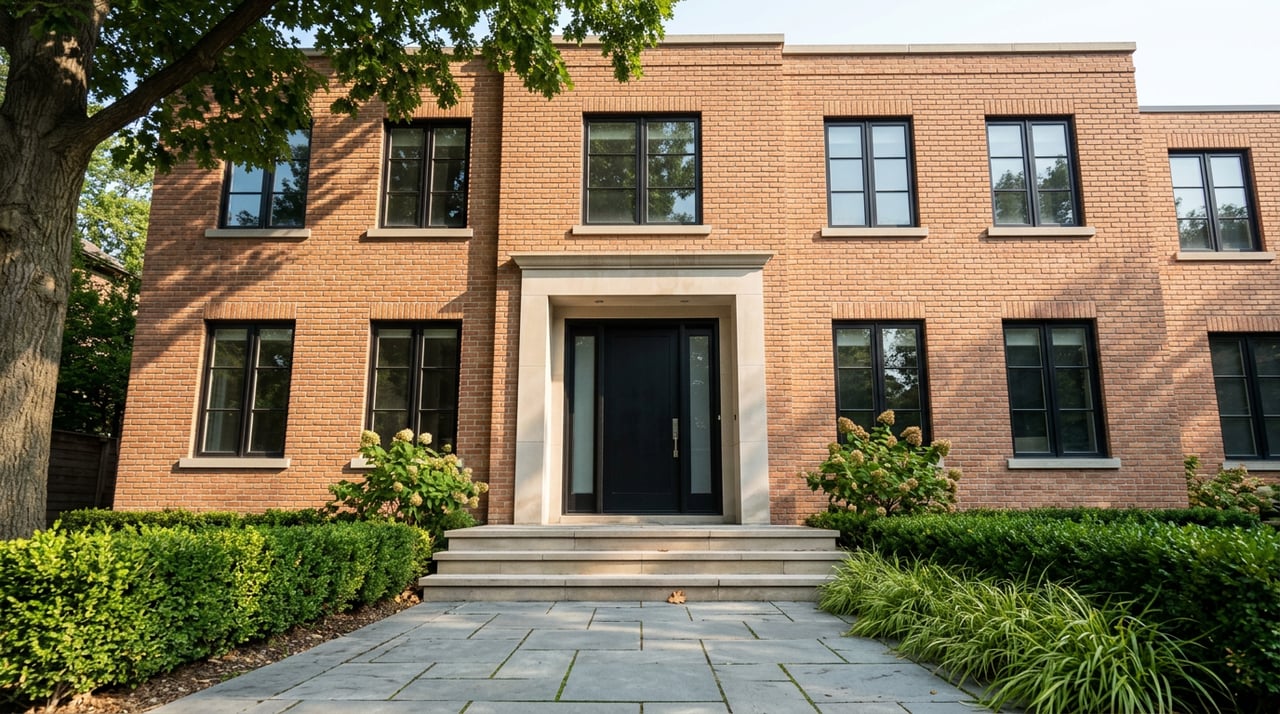
"Some people are opposed to being next to a construction site, but in the long run, it adds value to the street when you have all new homes."
That's what Robert Greenberg told the Globe and Mail after he and Mahsa Parseh, both with Harvey Kalles Real Estate Ltd., closed a deal on Haddington Avenue in Bedford Park this past July. Their client had spent weeks worried that the half-built house next door would scare off buyers. Instead, the two-storey home on the 42 by 130-foot lot drew two offers and sold for $3.24 million in just 11 days on the market, against an asking price of $3,295,000.
Most people would guess a construction site next door knocks a few points off your sale price. In Bedford Park, that guess is often wrong, and understanding why tells you something real about how this specific market works.
The Assumption Most Buyers Bring With Them
If you're comparing Bedford Park to other North Toronto pockets, you've probably toured a street or two with an active build in progress. A dumpster in the driveway. Plywood hoarding. The occasional Saturday morning that isn't quiet. It's a reasonable instinct to price that in as a negative, the same way you'd discount a home backing onto a busy road or sitting under a hydro corridor.
The Haddington Avenue sale is a useful correction to that instinct, because it's not a fluke. The seller and their agent went into the listing expecting the construction next door to be a liability. The market told them otherwise, at a specific address, on a specific street, with a specific dollar figure attached.
Why the Rebuild Next Door Isn't a Red Flag Here
Bedford Park is, in plain terms, a neighbourhood mid-rebuild. Original houses from the 1920s and '30s still stand on streets where larger custom homes have gone up over the past fifteen years, and that teardown-and-rebuild cycle hasn't slowed down. Construction noise and the occasional dumpster aren't an anomaly on any given block. They're closer to a constant.
That changes the math. In a neighbourhood where new construction is the exception, a build site next door signals disruption with no clear payoff for the buyer. In a neighbourhood where rebuilding is the norm, that same build site signals something else: the street is appreciating, one lot at a time, and you're buying in before the block finishes catching up to itself.
The clearest illustration of that isn't Haddington Avenue. It's a house a few blocks over. In 2022, 237 Bedford Park Avenue sold for $1,658,000 as a dated two-bedroom bungalow, complete with green wall-to-wall carpeting and a kitchen that didn't have a dishwasher. By this spring it was back on the market as a rebuilt three-storey custom home, asking $3,695,000.
| 2022 (as bungalow) | 2026 (as rebuild) | |
|---|---|---|
| 237 Bedford Park Ave. | $1,658,000 | Asking $3,695,000 |
That's not a case of the neighbourhood appreciating around a static house. It's the house itself becoming the thing that pulls the block's value up, which is exactly the dynamic Greenberg was describing when he talked about new construction adding value to a street. The rebuild next door isn't competing with your home's value. In a lot of cases, it's underwriting it.
What This Means If You're Shopping Nearby
If part of your search strategy has been to target listings beside active construction, hoping for a price break, temper that expectation. The Haddington Avenue sale suggests buyers in this market are willing to look past a build site if the fundamentals of the home and lot are right, and sellers here increasingly know it. A 97% average sale-to-list ratio across Bedford Park-Nortown in the fourth quarter of 2025 backs that up. Well-positioned homes are trading close to what sellers ask, construction next door or not.
That doesn't mean every build site is a non-issue. A single-family lot mid-renovation for a few months is a different situation than a property backing onto a multi-unit project that will run for years. The distinction worth making as a buyer isn't "is there construction nearby," it's "what does this specific project add to the street once it's finished, and how long until it's done." Ask the listing agent directly. In a mid-rebuild neighbourhood, that information should be easy to get.
What This Means If You're Selling Next to a Build Site
If you own a home next to an active teardown and you're weighing whether to list now or wait until the dust settles, the Haddington Avenue result is worth sitting with. The seller there worried the disturbance would suppress interest. The listing agents priced it based on the fundamentals of the home and the street, not a pre-emptive discount for the construction next door, and the market backed that call with two offers in 11 days.
The lesson isn't that construction next door is irrelevant to pricing. It's that in Bedford Park specifically, it shouldn't be the first adjustment you make. Start with your comparables the way you would on any other listing: lot size, square footage, renovation level, and recent solds on your specific block. Layer in the construction only if buyer feedback during showings actually surfaces it as a concern, rather than assuming it in advance.
A Few Questions Worth Asking Before You List or Offer
Does this pattern hold for every kind of nearby construction, or just single-family teardowns? The evidence here is specific to detached, single-family rebuilds, which make up the bulk of construction activity on Bedford Park's residential streets. A large multi-unit development is a different scale of disruption and a different conversation. If you're weighing a property near a bigger project, ask about the timeline and phasing before assuming the Haddington Avenue outcome applies.
As a seller, do I need to disclose construction happening next door? Buyers touring the home will see it, and any agent worth working with will make sure it's addressed honestly during showings and in conversations with interested buyers. Treat it as a fact about the property's setting, not something to hide or spotlight unprompted.
How long does the disruption from a rebuild actually last? It varies by project scope and permitting timelines, and the honest answer is you should ask the builder or the neighbouring homeowner directly if you're deep enough into a decision that it matters. What the recent sales data suggests is that buyers here aren't waiting for construction to finish before they commit.
The Takeaway
A construction site next door is one of those details that feels like it should move the price down. In most of Bedford Park, right now, the data says otherwise. The Haddington Avenue sale and the transformation of 237 Bedford Park Avenue both point to the same underlying mechanism: in a neighbourhood defined by its own rebuild cycle, new construction next door isn't a flaw in the listing. It's often a preview of where the street is headed.
If you're weighing a purchase near an active build, or wondering how to price your own home next to one, that distinction is worth getting right before you write an offer or set a list price. For a read on what your specific street and lot size are actually worth in today's market, you can also see how recent Bedford Park sales have played out across the wider neighbourhood.
If you want a second opinion on a specific address, whether you're buying next to a build site or selling one, the Jamie Dempster Team can walk you through the comparables on your exact block. Request a Free Home Evaluation and we'll help you separate what actually moves price here from what just looks like it should.